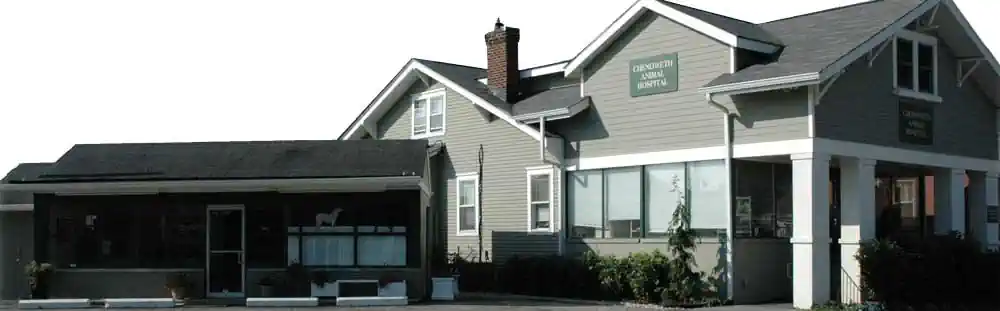
Find answers to common questions about appointments, services, medications, surgery, and caring for your pet.
Q. What is the vaccination schedule for my new puppy or kitten?
There are several vaccinations puppies and kittens require. Puppies need vaccinations for DHLP-P ("Distemper"), Coronavirus, Rabies, Bordetella (Kennel Cough), and Lyme disease. Kittens need vaccinations for FVRCP-C ("Distemper"), FeLV (Feline Leukemia), and Rabies. As with children, several booster vaccinations are necessary to help build immunity and provide long-term protection.
🐶 Puppies
-
6 Weeks
DHLP-P 1
-
9 Weeks
DHLP-P 2, Coronavirus 1
-
12 Weeks
DHLP-P 3, Coronavirus 2, Bordetella
-
16 Weeks
DHLP-P Adult, Rabies, Lyme
🐱 Kittens
-
6 Weeks
FVRCP-C 1
-
9 Weeks
FVRCP-C 2
-
12 Weeks
FVRCP-C 3, FeLV 1
-
16 Weeks
Rabies, FVRCP-C Adult, FeLV 2
Q. What is the best method for house training my new puppy?
To help house train your puppy successfully, it is recommended that you purchase a crate or kennel that is large enough for your puppy to stand, turn around, and lie down comfortably. The crate should become your puppy's safe sleeping area and personal space.
When you are at work, away from home, or unable to supervise your puppy, place them in the crate. Whenever your puppy is out of the crate, take them outside frequently, especially after meals, naps, playtime, and approximately every two hours.
Consistency and positive reinforcement are the keys to successful house training. When your puppy eliminates outdoors, immediately offer praise, affection, or a small reward. As your puppy matures, they will gain better bladder control and learn to signal when they need to go outside.
Q. What is a spay?
A spay procedure, also known as an ovariohysterectomy, involves the surgical removal of the ovaries and uterus. This procedure permanently prevents pregnancy and eliminates future heat cycles. Spaying is generally recommended before a pet's first heat cycle, typically around six months of age, although the ideal timing may vary depending on breed, size, and overall health.
Prior to surgery, your pet will receive pre-anesthetic blood testing to evaluate liver function, kidney function, electrolyte levels, and a complete blood count. These screenings help ensure that anesthesia can be administered as safely as possible.
We use modern anesthetic protocols and monitoring equipment comparable to those used in human medicine. After surgery, patients are closely observed and typically remain overnight so our team can monitor their recovery, manage discomfort, and ensure they are ready to return home safely.
Benefits of Spaying
Spaying helps prevent unwanted litters and can reduce the risk of certain reproductive diseases, including uterine infections and mammary tumors.
Q. What is a neuter?
A neuter procedure, also known as castration, involves the surgical removal of both testicles. It is one of the most common surgical procedures performed in veterinary medicine and is typically recommended at approximately six months of age, although timing may vary based on your pet's breed, size, and overall health.
Prior to surgery, every patient receives pre-anesthetic blood testing to evaluate liver function, kidney function, electrolyte levels, and a complete blood count. These tests help identify potential health concerns and allow us to administer anesthesia as safely as possible.
We use modern anesthetic protocols and monitoring equipment comparable to those used in human medicine. Following surgery, patients receive pain management and are carefully monitored throughout recovery. Most patients remain overnight so our veterinary team can ensure a smooth recovery and that your pet is comfortable before returning home.
Benefits of Neutering
Neutering helps prevent unwanted litters and may reduce the risk of certain reproductive diseases and behaviors associated with intact male pets, contributing to a healthier and happier life.
Q. Why should I get a dental cleaning for my pet and what does it entail?
As plaque and tartar accumulate, bacteria thrive in the warm, moist environment around the teeth and gums. This can lead to gingivitis, periodontal disease, bad breath, tooth loss, and painful oral infections. In some cases, oral bacteria may enter the bloodstream and affect important organs such as the heart, liver, and kidneys.
Prior to the cleaning procedure, your pet will undergo blood testing to evaluate liver and kidney function and screen for signs of infection or other health concerns. A safe anesthetic protocol is used so a complete oral examination and thorough cleaning can be performed comfortably and effectively.
Using specialized ultrasonic equipment, plaque and tartar are removed from both above and below the gumline. The teeth are then polished to smooth the enamel surface, helping slow future plaque accumulation. Most patients return home the same day and recover quickly.
Continued dental care at home is essential. We recommend using toothbrushes and toothpaste specifically formulated for pets. Pet toothpastes are safe to swallow and are available in flavors that appeal to dogs and cats, making routine brushing easier and more enjoyable for both pets and owners.
Why Dental Cleanings Matter
Regular professional dental care helps prevent painful dental disease and supports your pet's overall health and quality of life.
Q. What should I do if I have accidentally taken my pets medication?
You should have the name of the medication ready and call your doctor or poison control immediately.
Louisville Poison Control
502-589-8222However, most medications for animals are low dosages and thus not harmful to humans.
Q. What should I do if my pet has ingested my medication?
You should have the name of the medication ready and call your veterinarian or poison control immediately.
If after hours, take your pet to an emergency animal hospital.
Some medications and household items are toxic to animals and could kill them if not treated right away.
For instance, aspirin, tylenol and lilies are toxic to cats and antifreeze is toxic to most animals.
Louisville Poison Control
502-589-8222